Meent’s Standard Hearing Assessment & Fitting Center Solution delivers a complete audiological pathway — from newborn hearing screening through diagnostic audiometry to hearing aid fitting and follow-up care — in compliance with ISO 8253-1 and national early hearing detection and intervention guidelines. The solution integrates a sound-isolated booth, a suite of calibrated audiometers, and a hearing aid verification system, enabling audiologists to provide high-quality, reproducible hearing care.
Perspective: Audiology Department Leads & Hearing Aid Dispensers — Establishing a certified, full-service hearing assessment and rehabilitation center with rigorous quality assurance.
Meent supplies and commissions the Isolation Booth, a prefabricated, modular double-walled enclosure with an acoustic attenuation of 45 dB at 500 Hz rising to 60 dB at 4 kHz, conforming to ANSI S3.1-1999 maximum permissible ambient noise levels for audiometric testing. The booth is assembled on-site within 8 hours; its floor is a floating slab of high-density particle board on vibration-damping mounts, and the door uses a double magnetic seal and a pneumatic closer. Inside, the ambient noise level is verified not to exceed 25 dBA using a Type 1 sound level meter.
Inside the booth, a patient chair with a high-back headrest and a visual alert system (a red lamp that flashes when the intercom is activated) is placed. The booth’s window is a triple-glazed, 30×40 cm laminated glass panel with an angle of 15° to avoid light reflections. A USB-powered patient response button is mounted on the armrest. The audiologist outside the booth communicates via a two-channel talkback system with a talk-over function.
Technical Note: The booth’s acoustic seals must be inspected annually for compression set; a door seal that fails to rebound to 90% of its original thickness creates a flanking path. Ambient noise levels inside the booth are measured quarterly with the ventilation fan running; any increase exceeding 2 dBA requires a check of the fan motor bearings.
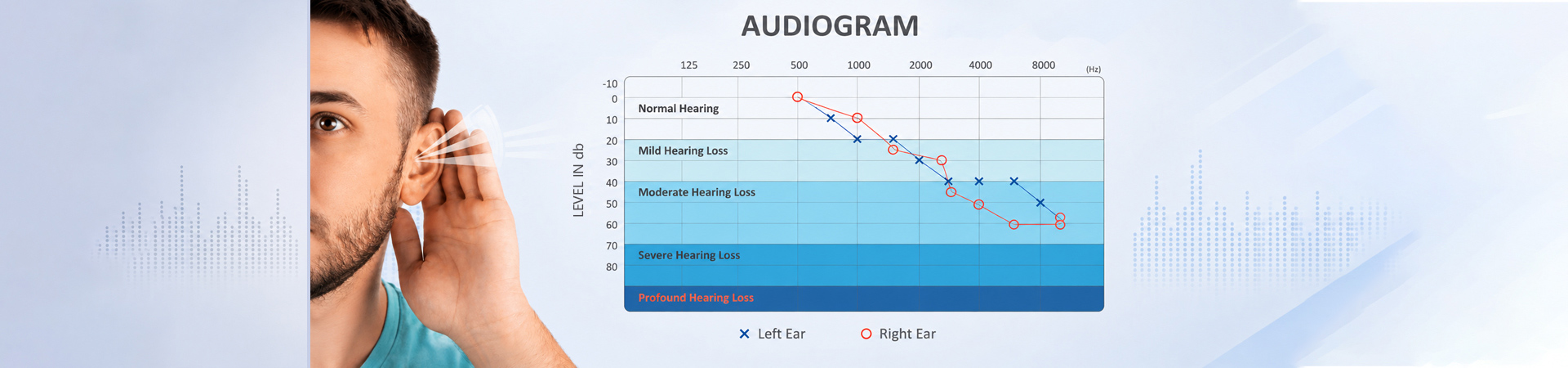
Meent installs the Pure-Tone Audiometer as the central diagnostic instrument. This two-channel clinical audiometer delivers air-conduction stimuli via TDH-39 headphones (0.125–8 kHz, −10 to 120 dB HL) and bone-conduction stimuli via a B-71 oscillator (0.25–6 kHz, −10 to 80 dB HL). The signal type is selectable among pure tone, warble tone, and narrow-band noise. A built-in test battery suite includes the Hughson-Westlake threshold procedure, the automatic Bekesy sweep, and suprathreshold speech audiometry with pre-recorded word lists in the local language.
Adjacent, the Tympanometer performs a 226 Hz probe-tone tympanogram over a pressure sweep of +200 to −400 daPa at a rate of 200 daPa/s, measuring static admittance, tympanometric peak pressure, and equivalent ear canal volume. Ipsilateral and contralateral acoustic reflex thresholds are tested at 0.5, 1, 2, and 4 kHz with a stimulus duration of 1 second. Results are classified automatically as Type A, As, Ad, B, or C using the Jerger classification.
Technical Note: The audiometer must undergo a daily biological calibration check: a hearing-impaired staff member with stable thresholds performs a listening check at all frequencies; any shift exceeding 5 dB from the reference audiogram triggers a full electroacoustic calibration. The tympanometer’s probe tone SPL is verified monthly with a 2-cc coupler; a deviation exceeding 1.5 dB SPL mandates service.
Meent incorporates the OAE Hearing Screener, a hand-held device using distortion product otoacoustic emissions (DPOAEs). The probe, fitted with a soft foam tip, delivers two primary tones (f2/f1 = 1.22) at 65/55 dB SPL across frequencies of 2, 3, 4, and 5 kHz. The device calculates the signal-to-noise ratio (SNR) for each frequency; a pass requires an SNR ≥ 6 dB in at least three frequency bands. Results are displayed as Pass/Refer, with the DP-gram plotted on the screen.
The OAE screener is used in the well-baby nursery for universal newborn hearing screening within the first 48 hours of life, as well as in the audiology clinic for patients who cannot provide reliable behavioural thresholds (e.g., malingering, developmental delay). Data is transferred via USB to the clinic’s hearing screening database, which generates a monthly report of screen completion rate, refer rate, and diagnostic follow-up rate.
Technical Note: The OAE probe must be cleaned with a disinfectant wipe between patients, and the probe tip replaced. A low probe-fit check (signal exceeding 5% distortion) before the test indicates a blocked sound port, requiring probe cleaning. An annual cavity test with a 0.5-cc hard-walled cavity must produce an artifact response below −10 dB SPL.
Meent provides the Hearing Aid Kit and the Portable Audiometer for the fitting and follow-up phase. The kit contains a selection of receiver-in-canal (RIC) and behind-the-ear (BTE) hearing aids covering mild-to-severe hearing loss, a programmer interface, and a hearing aid analyzer test box. The Portable Audiometer is a battery-operated air-conduction screening audiometer with 0.5, 1, 2, and 4 kHz at 20–70 dB HL, used for in-situ threshold verification.
The fitting protocol uses real-ear measurement (REM): a probe microphone tube is inserted to within 5 mm of the tympanic membrane, and the hearing aid’s output is measured against NAL-NL2 prescriptive targets for soft (55 dB SPL), moderate (65 dB SPL), and loud (75 dB SPL) speech. The audiologist adjusts the hearing aid’s gain, compression ratio, and maximum power output via a wireless programmer while watching the real-ear aided response curve on the computer screen. The final settings are saved to a cloud-based fitting log, and the patient receives a laminated card with the hearing aid’s model, serial number, and battery type.
Technical Note: The probe microphone tube must be marked with a depth indicator and inserted under otoscopic visualisation; a tube placed deeper than 30 mm past the tragus can contact the tympanic membrane. The hearing aid analyzer test box requires an annual acoustic calibration using a reference microphone; a frequency response deviation exceeding 3 dB at 1 kHz necessitates factory service.
Meent deploys an audiology practice management system that links the diagnostic audiometer, tympanometer, OAE screener, and hearing aid fitting software. The system generates a comprehensive “Hearing Health Passport” for each patient, summarizing the most recent audiogram, tympanogram scores, hearing aid fitting date, and next scheduled review. Automated SMS reminders are sent to the patient 2 weeks before the annual follow-up appointment.
The dashboard monitors key performance indicators: percentage of patients with a hearing disability who are successfully fitted with amplification, average daily hearing aid use in hours (obtained from data logging in the hearing aid), and patient-reported outcome using the International Outcome Inventory for Hearing Aids (IOI-HA) collected at 3 months post-fitting. The audiologist reviews the dashboard at a quarterly quality meeting, and patients with low hearing aid use (<4 hours/day) are contacted for a troubleshooting consultation.
Technical Note: The cloud-based database must be encrypted at rest with AES-256 and in transit with TLS 1.3. Patient consent for data sharing must be re-confirmed annually, and a hard copy of the consent form is stored in a locked filing cabinet as a legal record.
Subscribe to MEENT to unlock integrated solutions across dentistry, ophthalmology, ENT, audiology, and general practice—elevating diagnostic precision, clinical workflow, and patient outcomes through a unified ecosystem of imaging and therapeutic platforms.
© Nortek HealthCare Group Ltd., 2009-2026. All rights reserved.
This site operates under the laws of the People's Republic of China. Your access and use constitute acceptance of these Terms of Use and our Privacy Policy. All content is governed by our Privacy Notice. For details or inquiries, please Contact Us or use the site's search function.