Meent’s Integrated Imaging-Guided Dental Center Solution provides full clinical workflow, combining diagnostic imaging, chairside treatment and instrument sterilization into smooth operation. Created for dental clinic leaders, the solution applies real-time imaging to assist treatment, standardize infection control and streamline the whole patient process from inspection to post-treatment records.
Target users: Dental practice owners and clinical directors. Build integrated dental clinics to combine imaging, restoration and sterilization within one efficient space.
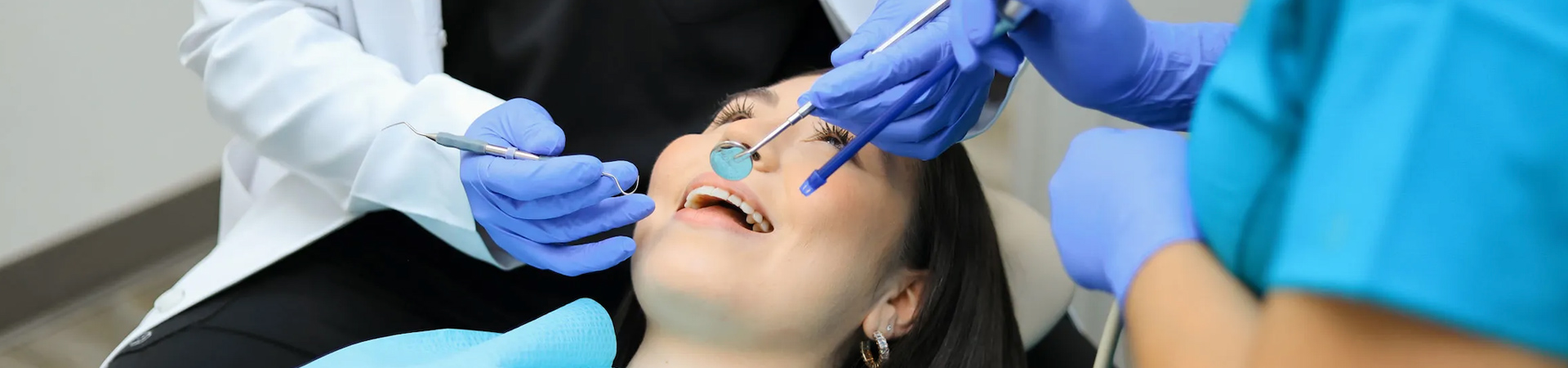
Meent begins by installing the Panoramic Dental X-Ray system in a dedicated radiographic alcove with lead-lined walls and a radiation warning interlock. The unit employs a rotating C-arm with a 0.5 mm focal spot, capturing a full-mouth panoramic image in 12 seconds with a patient dose of less than 15 μSv. A cephalometric attachment is available for orthodontic practices, enabling lateral skull projections for cephalometric analysis. DICOM image data is routed over a gigabit Ethernet backbone to a central imaging server with 8 TB of RAID 10 storage, where an AI-assisted screening algorithm highlights suspected carious lesions, periodontal bone loss, and impacted third molars.
Adjacent to the panoramic unit, each dental operatory receives an Intraoral Camera System. The camera handpiece, a lightweight (60 g) device with a 1280×720 pixel CMOS sensor and six integrated white LEDs, captures intraoral video at 30 frames per second. A single-touch capture button freezes the image, which is immediately displayed on a 24-inch chairside monitor. The software generates a quadrant-by-quadrant odontogram, mapping findings onto the virtual tooth chart. Images are used to educate the patient on treatment needs, and the patient’s signed acceptance is recorded electronically.
Technical Note: The Panoramic X-Ray’s dose calibration must be verified annually using a dosimetry phantom conforming to IEC 61223-3-4. A deviation of the half-value layer (HVL) exceeding 0.2 mm Al from baseline indicates tube filtration degradation. The intraoral camera’s sapphire lens window must be wiped with a 70% isopropyl alcohol swab between patients; dried saliva film reduces image sharpness by up to 30%.
Meent installs the Dental Chair at each workstation, a fully articulating patient support with twin electric actuators offering a height range of 35–85 cm and a backrest recline of 0–80°. The chair’s memory-foam upholstery is covered in seamless, PU-coated antimicrobial material that withstands 10,000 cycles of quaternary ammonium disinfection. The integrated headrest articulates on a ball joint with a locking lever operable by the dentist’s knee, maintaining the Frankfort plane horizontal for maxillary procedures. A four-point swivel delivery system positions the instrument tray over the patient’s chest, with a touchpad that stores three programmable chair positions (entry/exit, mandibular access, maxillary access).
The Dental Handpiece family comprises high-speed air-turbine handpieces (400,000 rpm, push-button bur release) and low-speed contra-angle and straight handpieces with an adjustable speed range of 100–40,000 rpm. High-speed handpieces feature a ceramic ball-bearing turbine, a triple-spray water port, and a fibre-optic glass rod delivering 30,000 lux of illumination at the bur tip. The handpieces are lubricated with a dedicated automatic oiling station after every autoclave cycle, and their chuck pressure is checked monthly with a tensiometer; gripping force must exceed 20 N to prevent bur slippage.
Technical Note: The Dental Chair’s actuator must be load-tested annually at 135 kg (1.5× rated 90 kg patient weight) with the backrest at maximum recline; a failure to raise within 10 seconds indicates hydraulic bypass. High-speed handpieces should be replaced or rebuilt after 500 autoclave cycles; beyond this, turbine blade erosion reduces cutting efficiency by 40%.
Meent supplies the Air Compressor as a silent, oil-free scroll-type unit delivering 120 L/min at 6 bar with a dew point of −20 °C. It is installed in a ventilated plant room adjacent to the clinical area, connected via a copper distribution network with isolation valves and a medical-grade desiccant dryer that achieves a downstream particulate filtration of 0.01 μm. A pressure regulator at each dental unit maintains a steady 2.8 bar for handpiece drive and 4.0 bar for the air/water syringe. The compressor runs on a duty cycle of 70%; an automatic condensate drain empties the receiver tank every 45 minutes.
The air system is integrated with the dental chair’s control module: if line pressure drops below 2.0 bar during a procedure, an audible chime and amber warning lamp prompt the dentist to check the handpiece coupling. The compressor’s hour meter is monitored remotely via a cloud-based maintenance portal; a service alert is generated at 2,000-hour intervals for filter and desiccant replacement.
Technical Note:The desiccant dryer beads must be baked at 120 °C for 2 hours every 6 months to regenerate their adsorptive capacity. A colour-change indicator turns from blue to pink when saturated; if pink beads appear at the outlet, the dew point has risen above −10 °C and the downstream lines must be purged with dry nitrogen for 20 minutes before clinical use.
Meent positions the Dental Autoclave, a Class B vacuum steam sterilizer, in the central sterilization area. The unit features a 24-litre chamber, a fractionated pre-vacuum cycle achieving an air removal stage of less than 0.8 kPa absolute, and a sterilizing temperature of 134 °C held for 3.5 minutes — validated for solid, hollow, and porous loads per EN 13060. A built-in steam generator produces saturated steam from demineralized water; an automatic water-fill system monitors conductivity and rejects water exceeding 15 μS/cm.
The autoclave’s data logger records time, temperature, and pressure at 1-second intervals for every cycle. A pass/fail decision is based on a Fo value exceeding 30 minutes for a reference temperature of 121 °C. Cycle reports are printed on adhesive labels and affixed to the instrument pouch. Biological indicators (Geobacillus stearothermophilus spores) are run daily in a full-loaded chamber; a positive culture result triggers immediate recall of all instruments processed since the last passing test and a complete chamber clean with a phosphoric acid descaler.
Technical Note:The autoclave door gasket must be inspected weekly for cracking; a defective gasket leaks steam and prevents adequate temperature penetration in hollow instruments. The water-fill conductivity sensor is calibrated monthly with a 12.88 mS/cm standard solution; a drift exceeding 0.5 mS/cm produces premature descale warnings.
Meent integrates the Panoramic X-Ray, Intraoral Camera, and practice management software into a single patient dashboard. When the patient is seated, the dental assistant scans the patient’s QR-coded wristband; the dashboard loads the scheduled treatment plan, the most recent panoramic and intraoral images, and a colour-coded odontogram. The dentist reviews proposed restorations on a 55-inch 4K wall-mounted screen with a stylus annotation capability.
During treatment, the intraoral camera provides live magnification, and the dentist can freeze-frame critical steps (e.g., caries excavation depth, post-core fit) and save them to the patient’s record. Post-treatment, the software generates a report including before-and-after images, materials used (lot numbers scanned from barcodes), and recommended recall interval. The report is automatically transmitted to the referring dentist and printed for the patient’s home-care file. A monthly quality dashboard tracks image retake rates, endodontic overfill frequency, and sterilization cycle failures, supporting the clinic’s clinical governance programme.
Technical Note:The dashboard server requires a UPS with 30-minute runtime; a power outage during a sterilization cycle corrupts the data log and mandates a full Bowie-Dick test on the autoclave before the next clinical use. All patient images are archived with a DICOM-Patient Reconciliation workflow to prevent linking errors.
Subscribe to MEENT to unlock integrated solutions across dentistry, ophthalmology, ENT, audiology, and general practice—elevating diagnostic precision, clinical workflow, and patient outcomes through a unified ecosystem of imaging and therapeutic platforms.
© Nortek HealthCare Group Ltd., 2009-2026. All rights reserved.
This site operates under the laws of the People's Republic of China. Your access and use constitute acceptance of these Terms of Use and our Privacy Policy. All content is governed by our Privacy Notice. For details or inquiries, please Contact Us or use the site's search function.